
Driving AI ROI for NGOs

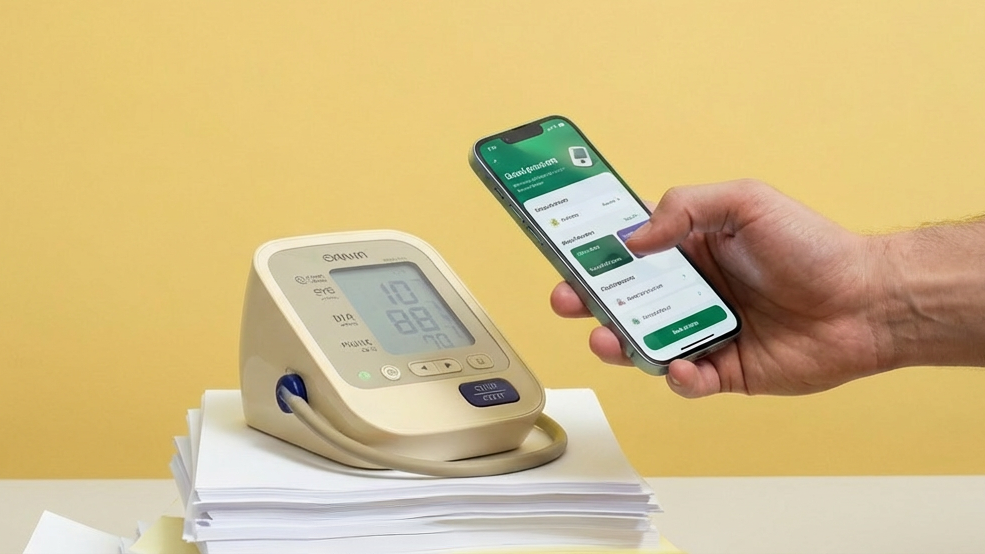
While funding bodies and government departments increasingly demand digital, structured data for compliance and reporting, the actual point of service remains stubbornly analog. The frontline of care is populated by devices that are functionally offline: blood pressure monitors, glucose meters, rehabilitation bikes, and industrial thermometers. These devices display critical data on transient LCD screens.
Currently, bridging the gap between that LCD screen and the NGO’s central database relies on a "Human API"—a caregiver reading a number, memorizing it, walking to a workstation, and manually transcribing it.
This manual bridge is fragile. It introduces latency, creates transcription errors, and critically, it diverts skilled labor away from high-value caregiving.
At i2hk, we engineered a computer vision solution designed to automate this specific edge case. This article details the architectural decisions behind our Visual Data Ingestion engine and how it is reshaping workflows across the District Elderly Community Centre (DECC) network.
The Constraint
The Reality of Hardware Fragmentation
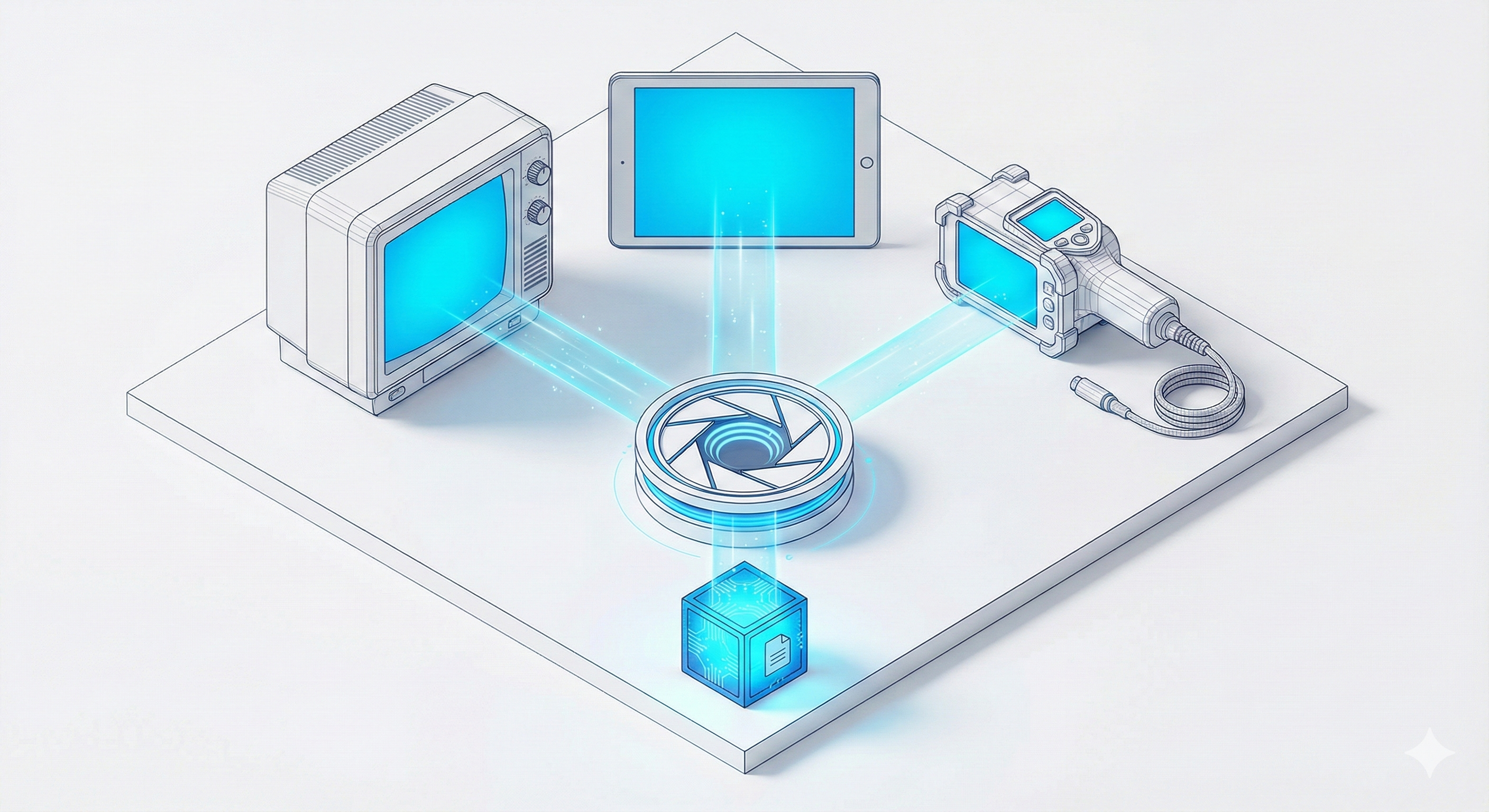
Unlike a private hospital that can standardize its equipment procurement, an NGO often operates a "heterogeneous fleet." A single center might utilize:
- Omron blood pressure monitors purchased in 2018.
- Panasonic units donated by a corporate sponsor in 2021.
- Generic pulse oximeters purchased in bulk during the pandemic.
- Industrial food safety thermometers for the community kitchen.
None of these devices speak the same digital language. Most speak no digital language at all.
The Bluetooth Fallacy
From a purely technical standpoint, the "ideal" solution would be IoT (Internet of Things). One might argue that NGOs should simply upgrade to Bluetooth-enabled medical devices that sync directly to a tablet.
However, in a practical engineering context, this approach fails at scale for two reasons:
- Cost Prohibitive: Replacing functional legacy equipment with smart devices across dozens of satellite centers is a massive capital expenditure that most NGOs cannot justify to their funding bodies.
- The "Pairing Penalty": In a high-throughput environment, managing Bluetooth connections is operationally expensive. If a volunteer brings a different device, or if a pairing connection drops, the workflow halts. Troubleshooting connectivity issues consumes more time than the actual medical check-up.
The Solution: The "Universal Adapter" Principle
We deliberately chose a Visual Capture strategy. We treat the smartphone camera as a universal API.
By using computer vision, we decouple the software from the hardware. Our system does not care if the rehabilitation bike is a brand-new Technogym model or a 10-year-old mechanical unit. If it has a seven-segment LCD display, we can digitize it. This allows NGOs to modernize their data infrastructure without modernizing their physical assets.
One Engine, Multiple Workflows
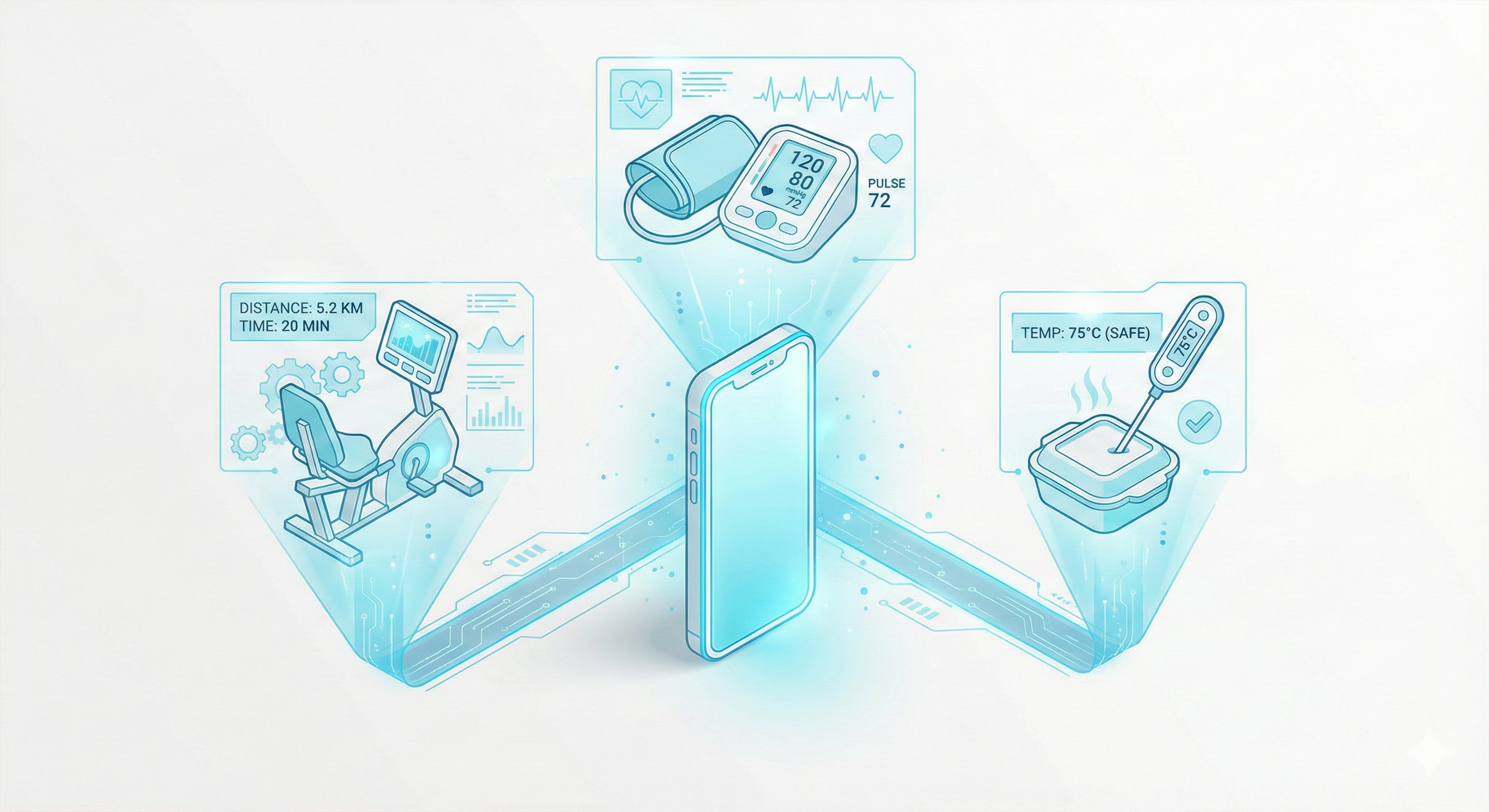
1. The Clinical Baseline: Vitals & Triage
Context: Morning Health Drives & Outreach Services
This is the most critical application. In the "morning rush" at a Day Care Centre, speed is often prioritized over precision. A systolic pressure of 148 is easily manually recorded as 184 due to cognitive fatigue. These errors corrupt longitudinal health records, making it impossible to spot genuine trends in an elder’s health.
The Workflow:
Staff utilize our mobile application to snap a photo of the device screen immediately after measurement.
- Technical Action: The model performs skew correction (fixing the angle of the photo) and glare reduction before extracting the numerical values.
- The Operational Gain: We create an immutable audit trail. Every data point in the system is backed by the original source image. If a doctor later questions a "Critical High" reading, they can retrieve the original photo to verify the measurement instantly.
2. The Rehabilitation Tracker: Digitizing "Dumb" Machines
Context: Stroke Rehabilitation & Physical Therapy Units
Physical therapy is a data-driven discipline, but the equipment in many community centers is analog. Seniors use recumbent bikes, hand grip dynamometers, or leg press machines that display metrics like "Distance," "Reps," or "Resistance Level" on simple screens.
Because there is no easy way to log this data, it is often lost. A therapist might write "Mrs. Wong exercised for 20 mins," but the granular data of her performance is missing.
The Workflow:
A physiotherapist—or the senior themselves—snaps a photo of the console at the end of the session.
- Technical Action: The AI identifies the equipment type (e.g., "Recumbent Bike Console") and parses the specific metrics relevant to that machine.
- The Operational Gain: We effectively turn "dumb" gym equipment into smart machines. Therapists can now visualize a stroke survivor’s recovery progress over 6 months (e.g., “Patient increased cycling resistance by 15% and duration by 40%”) without manual data entry.
3. Operational Compliance: Food Safety & Cold Chain
Context: "Meals on Wheels" & Medication Storage
NGOs face strict regulatory audits regarding food hygiene and medication safety. For example, insulin must be stored within a specific temperature range, and hot meals delivered to homes must maintain a safe internal temperature. This usually involves a paper logbook that is easily falsified, lost, or illegible.
The Workflow:
- Kitchen: Staff insert a digital probe thermometer into a meal container and capture the reading.
- Storage: Security staff or cleaners snap a photo of the fridge’s external temperature display during their rounds.
- The Operational Gain: Automated, timestamped compliance reporting. The NGO can prove to auditors that every meal was delivered within the safe temperature zone, with photo evidence anchored to a specific time and location.
The Architecture
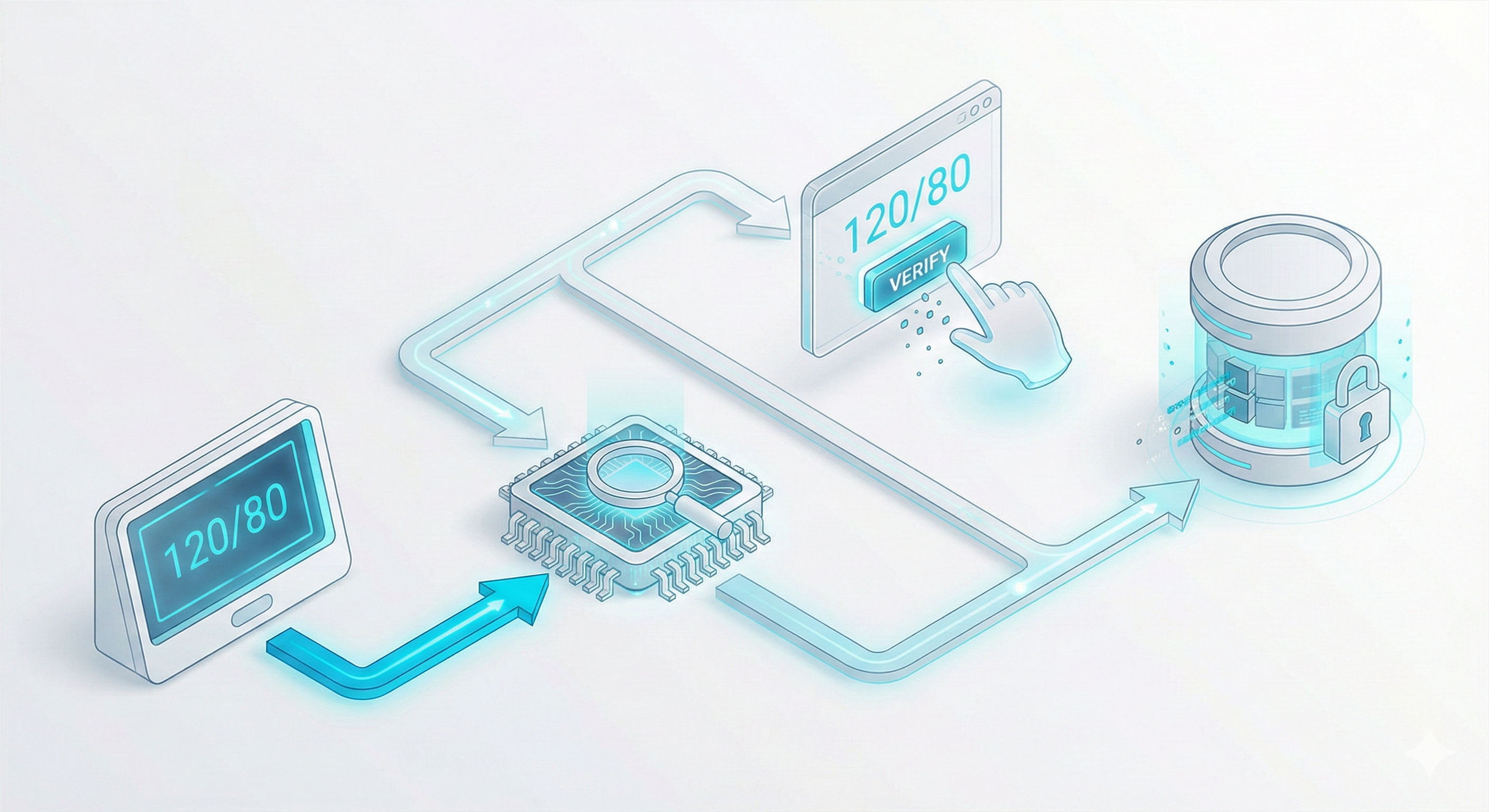
Trust is the currency of the medical sector. An AI model that acts as a "Black Box" will never be fully embraced by clinical professionals.
We designed our system on an Augmented Intelligence philosophy, not full automation. The architecture follows a strict Capture > Verify > Store protocol.
- Capture (The AI's Job): The model identifies the device type, isolates the screen region, and parses the digits. It handles the heavy lifting of transcription.
- Verify (The Human's Job): The parsed data is immediately presented back to the user on the phone screen for a split-second confirmation.
- Store ( The System's Job): Once confirmed, the data is hashed, timestamped, and pushed to the central cloud database.
This design ensures that while we automate the task of data entry, the responsibility remains with the human professional. It allows the caregiver to move faster, but it keeps them in control.
Conclusion
For Hong Kong’s NGOs, digital transformation is not about buying the flashiest gadgets. It is about solving the friction that exists in the real world—the dimly lit public housing flat, the chaotic morning center, and the busy community kitchen.
By turning existing screens into structured data, we are returning thousands of man-hours back to the sector. We are building a system where the technology works quietly in the background, allowing the caregivers to focus on what matters: the people in front of them.


 Contact Us Now